
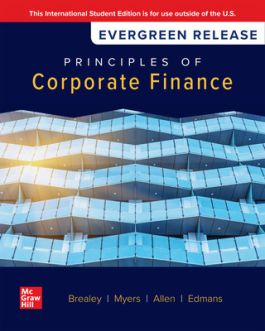
Principles of Corporate Finance: 2025 Release ISE
1264466633
·
9781264466634
Solicitar más información
Después de comprar su eBook, deberá descargar VitalSource Bookshelf, una aplicación gratuita . Luego, inicie sesión o cree una cuenta e ingrese el código del correo electrónico de confirmación de su pedido para acceder a su eBook.
- Acceda al eBook en cualquier momento y en cualquier lugar: en línea o sin conexión
- Cree notas, tarjetas y haga anotaciones mientras estudia
- Contenido de búsqueda completo: encuentre rápidamente las respuestas que está buscando
PART ONE: VALUE
1. Introduction to Corporate Finance
2. How to Calculate Present Values
3. Valuing Bonds
4. Valuing Stocks
5. Net Present Value and Other Investment Criteria
6. Making Investment Decisions with the Net Present Value Rule
PART TWO: RISK
7. Introduction to Risk, Diversification, and Portfolio Selection
8. The Capital Asset Pricing Model
9. Risk and the Cost of Capital
PART THREE: BEST PRACTICES IN CAPITAL BUDGETING
10. Project Analysis
11. How to Ensure That Projects Truly Have Positive NPVs
PART FOUR: FINANCING DECISIONS AND MARKETING EFFICIENCY
12. Efficient Markets and Behavioral Finance
13. An Overview of Corporate Financing
14. How Corporations Issue Securities
PART FIVE: PAYOUT POLICY AND CAPITAL STRUCTURE
15. Payout Policy
16. Does Debt Policy Matter?
17. How Much Should a Corporation Borrow?
18. Financing and Valuation
PART SIX: CORPORATE OBJECTIVES AND GOVERNANCE
19. Agency Problems and Corporate Governance
20. Stakeholder Capitalism and Responsible Business
PART SEVEN: OPTIONS
21. Understanding Options
22. Valuing Options
23. Real Options
PART EIGHT: DEBT FINANCING
24. Credit Risk and the Value of Corporate Debt
25. The Many Different Kinds of Debt
26. Leasing
PART NINE: RISK MANAGEMENT
27. Managing Risk
28. International Financial Management
PART TEN: FINANCIAL PLANNING AND WORKING CAPITAL MANAGEMENT
29. Financial Analysis
30. Financial Planning
31. Working Capital Management
PART ELEVEN: MERGERS, CORPORATE CONTROL, AND GOVERNANCE
32. Mergers
33. Corporate Restructuring
PART TWELVE: CONCLUSION
34. Conclusion: What We Do and Do Not Know about Finance
1. Introduction to Corporate Finance
2. How to Calculate Present Values
3. Valuing Bonds
4. Valuing Stocks
5. Net Present Value and Other Investment Criteria
6. Making Investment Decisions with the Net Present Value Rule
PART TWO: RISK
7. Introduction to Risk, Diversification, and Portfolio Selection
8. The Capital Asset Pricing Model
9. Risk and the Cost of Capital
PART THREE: BEST PRACTICES IN CAPITAL BUDGETING
10. Project Analysis
11. How to Ensure That Projects Truly Have Positive NPVs
PART FOUR: FINANCING DECISIONS AND MARKETING EFFICIENCY
12. Efficient Markets and Behavioral Finance
13. An Overview of Corporate Financing
14. How Corporations Issue Securities
PART FIVE: PAYOUT POLICY AND CAPITAL STRUCTURE
15. Payout Policy
16. Does Debt Policy Matter?
17. How Much Should a Corporation Borrow?
18. Financing and Valuation
PART SIX: CORPORATE OBJECTIVES AND GOVERNANCE
19. Agency Problems and Corporate Governance
20. Stakeholder Capitalism and Responsible Business
PART SEVEN: OPTIONS
21. Understanding Options
22. Valuing Options
23. Real Options
PART EIGHT: DEBT FINANCING
24. Credit Risk and the Value of Corporate Debt
25. The Many Different Kinds of Debt
26. Leasing
PART NINE: RISK MANAGEMENT
27. Managing Risk
28. International Financial Management
PART TEN: FINANCIAL PLANNING AND WORKING CAPITAL MANAGEMENT
29. Financial Analysis
30. Financial Planning
31. Working Capital Management
PART ELEVEN: MERGERS, CORPORATE CONTROL, AND GOVERNANCE
32. Mergers
33. Corporate Restructuring
PART TWELVE: CONCLUSION
34. Conclusion: What We Do and Do Not Know about Finance